Weekly Ritual
A weekly review isn't just a review — it's a course correction system that keeps you aligned with your goals and habits every single week.
What It Is
Think of your weekly review as a board meeting with yourself. It's a dedicated 30-60 minute session — ideally on Friday afternoon or Sunday evening — where you step back from the day-to-day and evaluate the bigger picture.
GTD (Getting Things Done) creator David Allen called the weekly review "the master key to GTD." Habit researchers agree: people who conduct weekly reviews are 2x more likely to maintain their habits long-term compared to those who don't.
The weekly review prevents the drift that slowly pulls everyone off course. Without it, weeks become months, and months become years of good intentions but inconsistent action.
Download Review Template

Step by Step
Brain dump everything floating in your mind — tasks, worries, ideas, and commitments. Get them out of your head and onto paper. A clear mind thinks better.
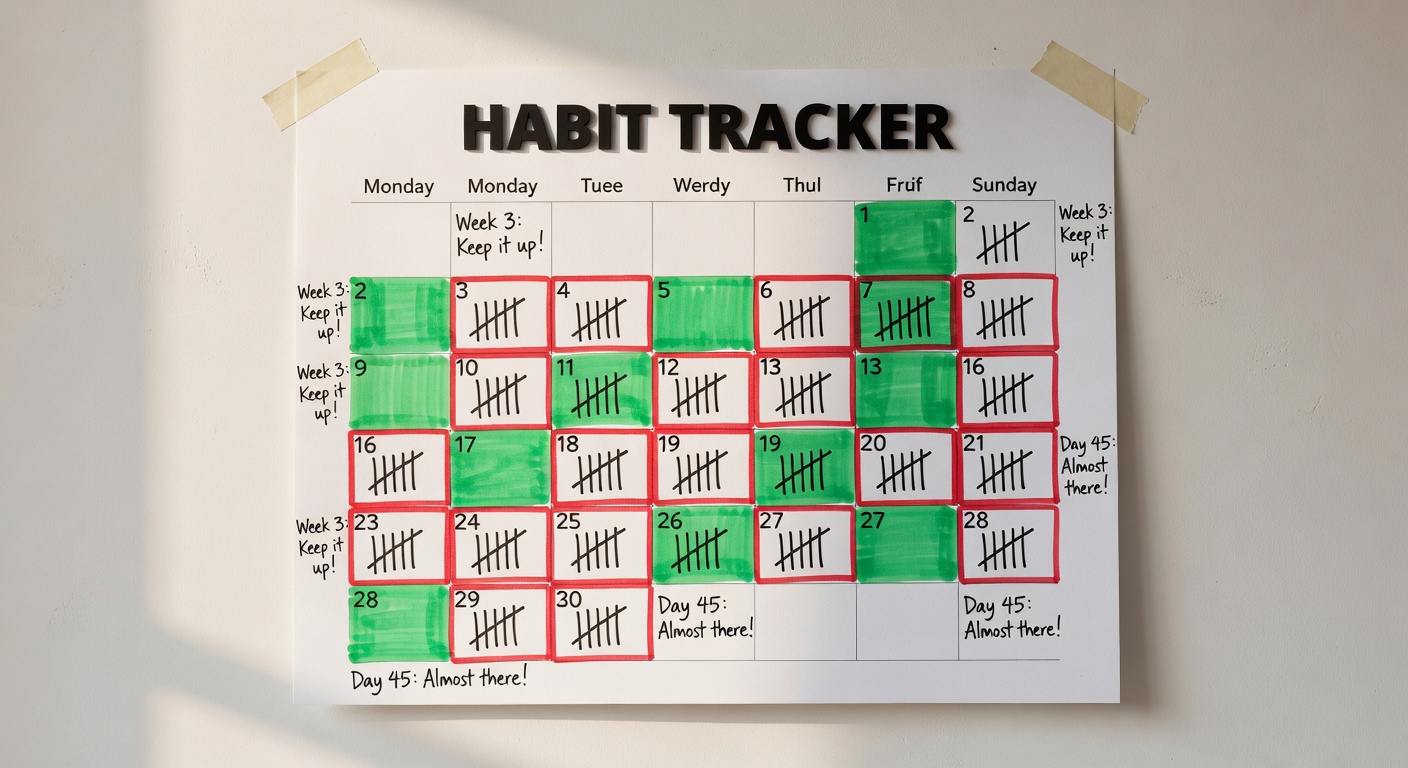
Open your habit tracker. Review each habit's performance this week. Note which ones you missed and identify any patterns. Celebrate what you did complete!
For each missed habit, ask: what got in the way? Was it a time issue, environment problem, lack of motivation, or competing priority? Get specific and honest.
For each obstacle, create a specific solution. "I missed my 7 AM meditation because meetings start early on Tuesday" → "Move meditation to 6:45 AM on Tuesdays."
Check your monthly and quarterly goals. Are your current habits aligned with where you want to go? Sometimes habits need to be added, removed, or modified.
Choose 3 habits or goals to focus on intensively next week. Set a specific intention: "This week, I will not miss my morning run under any circumstances."
Interactive Checklist
Check off each step as you complete it. Track your progress below.
Complete all steps for a thorough weekly review

Streaks & Momentum
Research by University College London shows that missing a habit once does not significantly impact long-term formation — but missing twice triples the risk of abandoning the habit entirely.