The Mathematics of 1%
Let's start with the arithmetic that changes everything. If you improve by just 1% every day, you will be 37.78x better at the end of a year. This is because 1.01 raised to the power of 365 equals 37.78.
Conversely, if you get 1% worse every day, you decline to nearly zero. 0.99 raised to the power of 365 equals 0.03 — you'd be left with just 3% of your current capability.
"You do not rise to the level of your goals. You fall to the level of your systems. The 1% principle is really about building systems that produce tiny, consistent gains." — James Clear, Atomic Habits
The power of this principle is profound. Most people overestimate what they can achieve in a day and wildly underestimate what they can achieve in a year. The 1% principle corrects this misalignment by shifting focus from dramatic daily results to tiny, consistent improvements.
The Plateau of Latent Potential
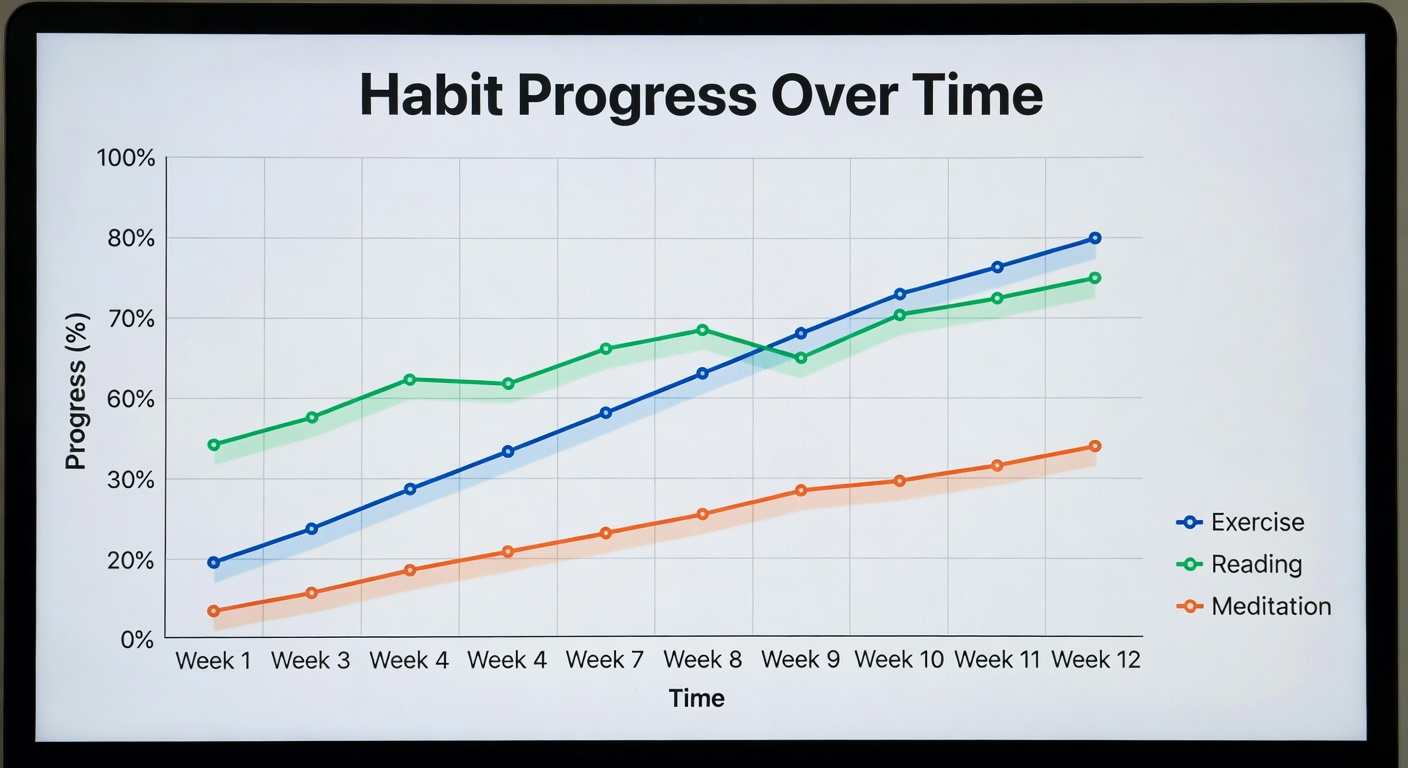
Here's the crucial insight most habit guides miss: when you start improving at 1% per day, you won't see results immediately. In fact, you may see almost no results for weeks or months. This is the "Plateau of Latent Potential" — a period where work is being done but results aren't visible yet.
Think of an ice cube sitting in a cold room. The room is at 26°F (-3°C). You begin heating the room. At 27°F, nothing happens. At 29°F, nothing happens. At 31°F, still nothing. Then, at 32°F (0°C), the ice begins to melt. That single degree seems to be responsible for all the change, but in reality, every previous degree mattered equally.
This is exactly how habits work. You journal for 30 days and see no change. You meditate for 60 days and feel the same. Then, seemingly overnight, you find yourself thinking differently, sleeping better, handling stress with ease. All those "uneventful" days built an invisible foundation.
Scientific Evidence
The 1% principle isn't just motivational rhetoric — it's supported by decades of research in behavioral science, neuroscience, and psychology.
- Neuroplasticity: Every time you repeat a behavior, the neural pathway associated with that behavior gets stronger. Each repetition is a 1% vote for your new identity.
- UCL Research (2010): Phillippa Lally's famous study found habits take 18-254 days to automate, with an average of 66 days. The variance exists because each day's practice contributes proportionally.
- K. Anders Ericsson's Deliberate Practice: World-class performers accumulate tiny improvements through countless hours of deliberate practice. No one becomes excellent overnight; they become excellent through compounded 1% days.
- British Cycling Team: Dave Brailsford famously aggregated "marginal gains" — 1% improvements in diet, equipment, training, and sleep — to turn a historically mediocre team into the most dominant cycling team in history.
Applying It to Your Habits
Understanding the 1% principle is easy. Applying it requires a specific mindset shift: you must become process-oriented, not outcome-oriented.
Step 1: Focus on the System, Not the Goal
Instead of tracking progress toward a goal (which is often invisible), track completion of your system. Did you run today? That's 1%. Did you read 10 pages? That's 1%. The system creates the results; results are just lagging indicators of the system's quality.
Step 2: Find Your 1% Opportunities
Ask yourself daily: where can I apply 1% more effort or intention? This might mean drinking one more glass of water, sleeping 15 minutes earlier, or spending 5 extra minutes reviewing your goals. Aggregated over months, these micro-improvements compound into transformation.
Step 3: Track Everything Visually
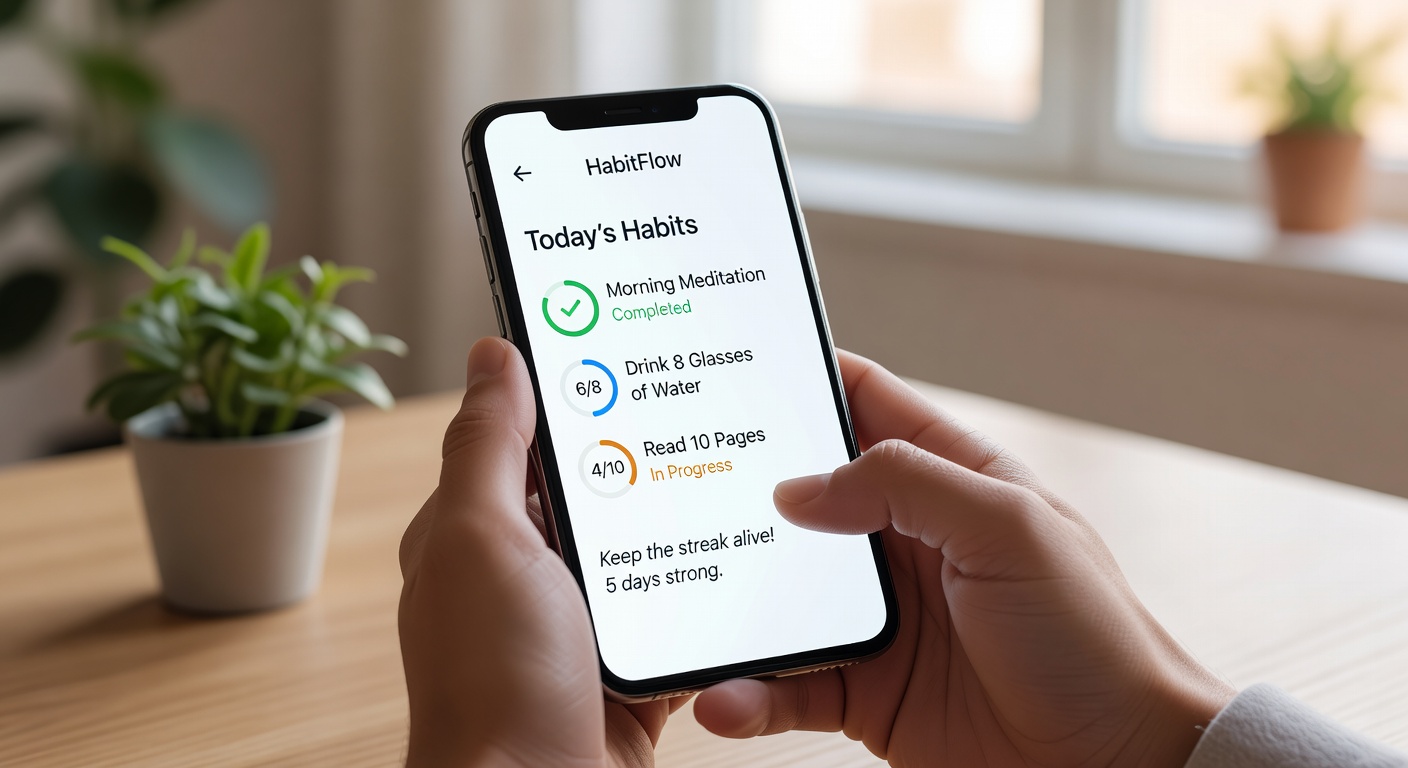
Habit tracking creates a visual representation of compounding improvement. Seeing a chain of 30 completed days makes the invisible progress visible and provides powerful motivation to maintain the streak.
Common Pitfalls
- Trying to improve 10% per day: This leads to burnout and injury. Sustainability is more important than speed. 1% daily is 37x in a year; 10% daily is unsustainable within a week.
- Measuring the wrong metric: If you focus on scale weight while building fitness habits, you'll be disappointed. Focus on habit completion rate, not the outcome metric.
- Comparing your chapter 1 to someone else's chapter 40: Compounding requires time. You cannot see someone else's "current" without their historical 1% days.
- Missing more than once: The compounding works in reverse too. Missing once loses a day's compound gain. Missing twice starts building a new (bad) compound habit.
Key Takeaways
- 1% better every day = 37x improvement in one year (mathematically proven)
- Expect a plateau before you see results — this is the Plateau of Latent Potential
- Focus on your system (daily habits) not your goals (outcomes)
- Visual tracking makes invisible progress visible and sustains motivation
- The most dangerous moment is just before the breakthrough — don't quit there